Steve Clancy – Autodesk Revit – Beginner to Intermediate level (Download)
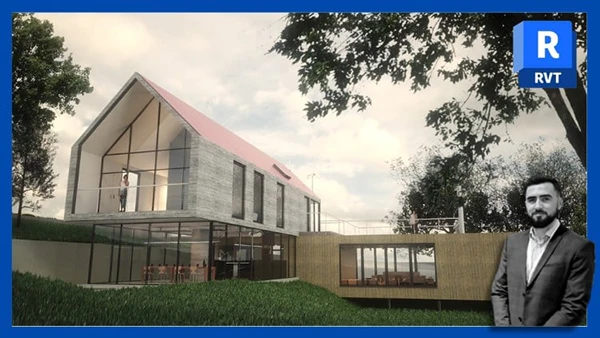
Building Information Modeling (BIM) has revolutionized architecture, engineering, and construction workflows. Autodesk Revit stands at the forefront of this transformation, enabling professionals to design buildings as intelligent 3D models rather than disconnected 2D drawings. For architects, engineers, designers, and contractors, Revit proficiency isn’t optional—it’s essential for modern practice. Yet many shy away from BIM software, overwhelmed by its complexity. The reality? With structured training, anyone can progress from complete beginner to confident intermediate user, ready to produce professional-quality building models.
About This Revit Course
Instructor Steve Clancy delivers comprehensive Revit training through one complete project that mirrors real-world workflows. Compatible with Revit versions 2018 through 2026, this course guides you through proper installation, core concepts, and practical application. The structured approach includes 15 section quizzes and a 40-question final exam to reinforce learning and validate your skills. Imperial measurement notes ensure accessibility for all regions.
Course Curriculum
Foundation and Interface
Begin with BIM fundamentals and essential Revit terminology before diving into proper software installation for your version. Master the interface through detailed tours covering the start screen, ribbons, panels, properties palette, project browser, view controls, and navigation tools.
Core Building Blocks
Learn wall creation methods, drawing options, and property modifications. Master basic editing tools including align, offset, mirror, move, copy, rotate, trim, extend, split, pin, array, and scale—essential commands you’ll use throughout every project.
Datum Elements and Structure
Establish your project foundation by creating levels and grid systems. Place structural and architectural columns precisely on grids, then construct external and internal walls. Add floor slabs and boundary elements using equality constraints for accurate positioning.
Building Components
Progress through door and window placement, loading components from Revit’s library, and creating custom types. Learn three methods for creating wall openings and understand how to modify wall profiles. Develop vertical circulation with component-based and sketch-based stairs, plus custom railings.
Advanced Elements
Master five roof creation methods including footprint-based pitched and flat roofs, extrusion techniques, and work planes. Design sophisticated curtain wall systems for entrances and facades. Create reflected ceiling plans with integrated components and lighting fixtures.
Documentation and Detailing
Develop 2D construction details using callouts, masking regions, detail components, insulation, custom line styles, text leaders, and break lines. Add precise dimensions using multiple methods and understand witness line controls.
You may also be interested in these courses:
- Andrei Neagoie – Complete Web & Mobile Designer: UI/UX, Figma, +more (Download)
- Martin Perhiniak – Illustrator MasterClass (Download)
Annotation and Scheduling
Place and customize tags for doors, windows, walls, and rooms. Generate automated schedules for components and create informative legends. Learn room creation and tagging workflows that link directly to schedules.
Visualization
Control shadows and sun settings for realistic presentations. Produce high-quality rendered images, create one-day solar studies, and develop multi-level walkthrough animations that showcase your designs dynamically.
Output and Delivery
Set up professional sheet layouts with title blocks, organize multiple views per sheet, configure page setups, and prepare documents for printing or PDF export.
Who Should Enroll
This course suits complete beginners with no CAD or BIM experience, professionals transitioning from AutoCAD or other 2D software, past Revit users refreshing their skills, and anyone preparing for the Autodesk Certified User exam. Architects, engineers, designers, and contractors gain immediately applicable skills for modern building design workflows.